Published 22 July 2026 | Sussex Wedding Planning | Tottington Manor Weddings Team
The wedding morning should feel like part of the celebration, not a race against the clock. A realistic plan gives hair and makeup enough time, leaves room for photographs and getting dressed, and still creates that surprisingly important final pause before the ceremony begins.
This guide forms part of our Sussex wedding planning collection. It is designed to help couples build a calm, practical morning whether they are getting ready at home, in a hotel or at a Sussex wedding venue with accommodation.
The short answer
Do not start with a fixed number of hours. Start with the ceremony time and work backwards. Allow for hair and makeup, getting dressed, photographs, food, travel or moving between rooms, small delays and at least a little time when nobody needs you to do anything.
Work backwards from the ceremony
The easiest way to build a wedding-morning timetable is to begin with the moment the ceremony starts and work backwards from there. If you need to be in the ceremony room at 2pm, the goal is not to finish getting ready at 1:59pm. The goal is to be genuinely ready before you need to move.
Decide when you want photographs, when clothing needs to go on, when hair and makeup should finish and when everybody involved needs to arrive. If you are travelling to the ceremony, build the journey and a sensible margin into the plan as well.
A good wedding-morning timetable finishes early enough that a ten-minute delay feels mildly annoying rather than catastrophic.
Hair and makeup usually set the pace
For many wedding mornings, hair and makeup take up the largest part of the preparation window. The timing depends on how many people are having professional services, how many stylists are working, the complexity of each look and whether anyone needs to leave earlier than the rest of the group.
Ask your hair stylist and makeup artist for realistic timings rather than trying to calculate them yourself. Give them the ceremony time, photography plans and the number of people involved. If several people are being prepared, agree an order in advance so nobody is wondering when they are needed.
The person getting married does not always need to be last. Finishing a little earlier can create more time for photographs, dressing and simply enjoying the room without everybody waiting for one final appointment to finish.
Getting dressed nearly always takes longer than expected
A wedding outfit is rarely the same as getting dressed for an ordinary day. Dresses may need fastening, steaming or arranging. Suits need final checks. Jewellery, shoes, cufflinks, ties, buttonholes and accessories have a remarkable ability to hide at exactly the wrong moment.
Allow proper time for dressing and for the people helping you. If a parent, friend or member of the wedding party is meant to help, they need to be dressed themselves first.
Think about the room, not just the timetable
A beautiful preparation space can become chaotic surprisingly quickly. Hair equipment, makeup bags, clothes, garment covers, breakfast trays, phones, chargers, flowers and overnight luggage all compete for space.
Choose somewhere with enough room for the number of people getting ready, useful natural light, mirrors, accessible power points and somewhere to hang clothing safely. Keep one area reasonably clear if you want photographs there.
If several members of the wedding party are staying at the venue, room allocation can make the morning much easier. Our guide to how many wedding venue bedrooms you really need looks at who benefits most from being onsite.
Eat and drink something
Wedding mornings are exciting, which makes it very easy to forget breakfast. Hair appointments begin, people arrive, photographs start and suddenly the ceremony is approaching on very little food.
Plan something simple and easy to eat, and keep water available too. Celebratory drinks may be part of the morning, but they are not a substitute for breakfast and hydration.
Decide when the photographer should arrive
Preparation photographs can be some of the most personal images from the day: family arriving, friends helping one another, the outfit hanging before it is worn, a parent seeing the finished look and the quiet moments before everybody leaves for the ceremony.
Talk to your photographer about what you actually want captured. Often the most useful window begins when the room is settling, key people are nearly ready and there is time to photograph details and relationships without interrupting the timetable.
Our guide to the wedding photographs you may value most in years to come explains why the people and unscripted moments often become more important than carefully arranged details.
Keep suppliers out of your personal timetable
The person getting married should not be answering calls about buttonholes, checking whether the cake has arrived or directing a supplier to the correct entrance while having their hair done.
Give suppliers a venue contact or nominate somebody who understands the plan. An experienced wedding coordinator or Master of Ceremonies can absorb those practical questions so the preparation group does not become an operations team.
Build in a people buffer
It is easy to make a timeline work mathematically and forget that weddings involve people. Someone will be late back from breakfast. A button will need fixing. A parent will become emotional. Somebody will suddenly realise their phone is in another bedroom.
Leave breathing space. You may use it for photographs, a glass of water, a conversation with a parent or simply five minutes sitting down. If everything runs perfectly, that spare time becomes one of the nicest parts of the morning.
A sample wedding-morning countdown
This is not a universal schedule, but it shows the order in which the morning can be built. Adjust it around your ceremony time, number of people, suppliers and location.
- Several hours before: breakfast, showers, room setup and the first hair or makeup appointments.
- Around three hours before: preparation is well under way; clothing and accessories are checked and laid out.
- Around two hours before: key people move towards finishing hair and makeup; the photographer may arrive depending on your plan.
- Around 90 minutes before: begin dressing the people who need to be ready to help others.
- Around an hour before: the couple gets dressed and portraits or family photographs begin.
- Final 30–45 minutes: touch-ups, flowers, final photographs, water, toilet break and a quiet pause.
- Ceremony time: arrive or move to the ceremony without turning the final five minutes into a sprint.
Do not invite everybody into the preparation room
A room can move very quickly from joyful to crowded. Decide who genuinely needs to be present. The right group is not necessarily the largest group; it is the people who make you feel calm, happy and looked after.
Remember that two people may be getting ready differently
One half of a couple may have several hours of hair, makeup and photography while the other needs much less preparation time. That does not mean the second timetable should be ignored.
Suits still need checking, buttonholes need attaching, personal belongings need organising and photographs may be planned. If both groups are at the same venue, coordinate their movements so they do not accidentally meet before the ceremony if that matters to them.
How this works at Tottington Manor
At Tottington Manor, weddings take place in one South Downs setting with hotel accommodation, ceremony and celebration spaces, food and the wedding team close together. That reduces the number of separate journeys and handovers that can make a wedding morning complicated.
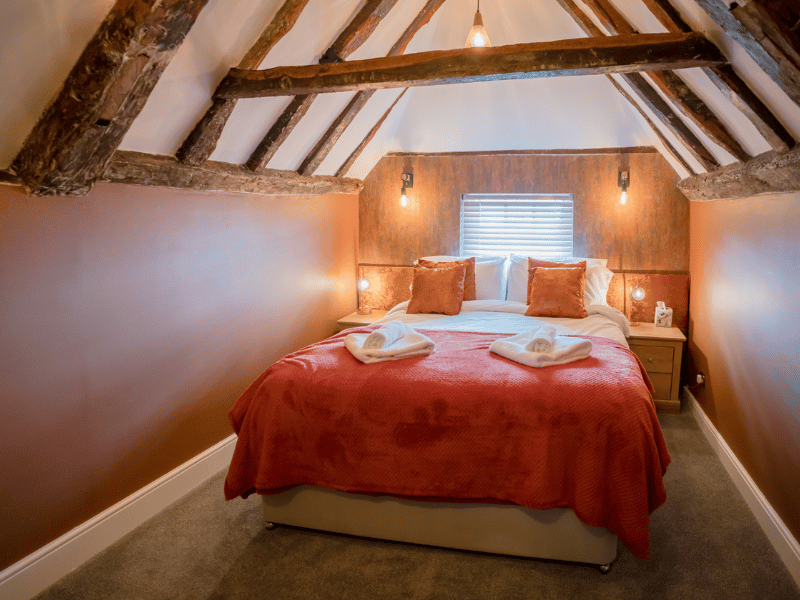
We have 12 boutique bedrooms, so room allocation can be planned around the couple and the people most involved in preparations. Couples can discuss arrival times, preparation arrangements, photography and the flow into the ceremony with the wedding team before the day rather than trying to solve those questions on the morning itself.
For the room where the day eventually ends, see our guide to choosing the perfect honeymoon suite.
Wedding morning FAQs
How long should I allow to get ready on my wedding day?
Work backwards from the ceremony and include every person having hair or makeup, dressing time, photographs, travel or movement around the venue and a buffer. The aim is to finish comfortably early, not exactly on time.
Should hair and makeup finish before the photographer arrives?
Not necessarily. Some preparation photographs can be lovely, but it helps if key people are close to finished before formal portraits begin. Agree the overlap with the photographer and beauty team.
How much spare time should I leave?
Enough to absorb an ordinary delay and still leave a few quiet minutes before the ceremony. If the schedule only works when every appointment finishes perfectly, it is too tight.
Who should get ready with me?
Choose the people whose presence genuinely improves the morning. A smaller, calmer group often works better than filling the room with everybody who might like to visit.
Related reading: the hidden stress of DIY weddings, what actually matters to wedding guests, and whether your wedding guests should stay overnight.
Plan a Calm Wedding Morning
Explore weddings at Tottington Manor, including ceremony spaces, accommodation, food, planning support and the practical details that help the whole day flow naturally.
Explore Weddings and Download the Brochure